Paint audit dossier · Kyiv studio

No polishing
without prior measurement.

Three paint-depth readings, a numbered defect map and a written stage quotation, issued before a pad touches your clear coat.

Assessment runs 90 minutes. Report goes out the same day.

Finish assessment sheet No. 0428 · 12.03.2025
  • Bonnet112 µm
  • Roof98 µm
  • Driver door104 µm
  • Swirls B · 14
  • RIDS C · 6
  • Oxidation A · 2
  • Etching B · 3
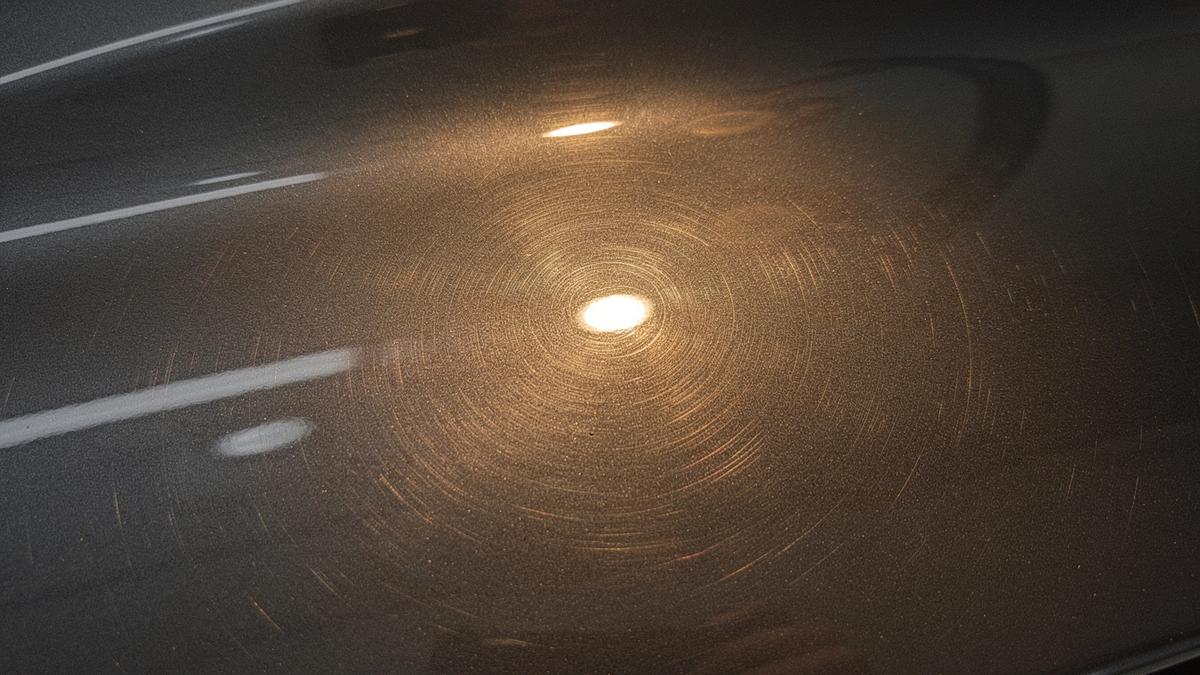
Macro crop of clear coat under inspection light showing fine swirl marks and measured paint depth
Clear-coat crop, 40× · VIN masked as UA1••••••••••4471

Method 02 · Inspection


No polishing without prior measurement

Three steps happen before a single pad touches the paint. Each one is written down, so the quote answers to a record instead of an opinion.

Sheet fields
Masked VIN, paint-depth values, defect tag table, exclusions note
Time on site
40–70 min
  1. 01

    Measure

    Paint-depth readings in µm are taken across bonnet, roof and both door rows, then clear-coat margin is logged per panel. A thin panel changes the plan before any tool is switched on.

    12–18 reading points · tabular record
  2. 02

    Tag the defects

    Swirls, RIDS, oxidation and etching are tagged by type and severity, each with a letter and a count. Deep scratches that polishing cannot address are tagged as excluded on the spot.

    Tag table · severity A to C
  3. 03

    Document the finish

    The findings become a four-page dossier: masked VIN, numbered paint map, defect table and an exclusions note stating what the finish will still show afterwards. You keep a copy.

    Four pages · hand-signed

Section 03 Documented sample


A finished assessment sheet, as it is handed over

Readings are taken at fixed points on bonnet, roof and doors. Every number below came from a gauge, not from an estimate. No polishing without prior measurement, so the sheet exists before any pad touches the paint.

Numbered paint map, thickness in µm

01Bonnet, left corner
128
02Roof, centre
141
03Front door, right
119
04Rear quarter, left
132
  • ASwirl marks, medium
  • BRIDS, four counted
  • COxidation, light
  • DWater etching, bonnet

Deep scratches are logged separately and marked as not addressed by polishing, then listed under exclusions.

Compare the polishing stages

05 Polishing options matrix

Three stages, each with a written boundary

No polishing without prior measurement. The same rows repeat for every stage so the included work and the excluded work sit side by side.

Reference matrix for a mid-size sedan, paint depth taken at three points per panel.
StagePassesIncludedNot included
Stage 1Finish refinement 1 pass Decontamination wash, clay, one light pass, gloss reading after Deep scratches, sanding marks, repaint blending
Stage 2Defect removal 2 passes Panel-by-panel compounding, refined polish, depth re-measure Deep scratches reaching primer, permanent correction claims
Stage 3Multi-pass correction 3 to 4 passes Numbered paint map, defect tag table, finish score, four-page dossier Factory-perfect finish, guaranteed swirl-mark elimination

Swirl marks are described as returning with normal washing, and deep scratches are generally not addressed by polishing. Both limits appear in the dossier before any work starts.

Read the full stage matrix and exclusions

06 Limits not promised

What polishing cannot fix

Clear coat is a finite layer. Every pass removes material, so some defects stay and some come back.

We measure film thickness first and quote only what the coating can safely support. If a defect sits below the clear coat, polishing will not remove it.

Read exclusions and risk
100% scratch removal
Not promised. Deep scratches generally sit below the clear coat.
Permanent correction
Not promised. Clear coat continues to age with use and washing.
Factory-perfect finish
Not promised. Original orange peel and prior repairs remain.
Guaranteed swirl-mark elimination
Not promised. Swirl marks return with washing.

No polishing without prior measurement. Documented limits, not sales promises.

06 / Studio facility

Kyiv, Bohdana Khmelnytskoho St 19, Office 604

One indoor bay, measured light, and a written record for every panel.

The workshop sits inside Business Center Leonardo in central Kyiv. A single enclosed bay keeps conditions steady: no street dust, no direct sun, no wind pressure on the paint while it cools.

Panels are measured with a coating thickness gauge before any polishing is quoted. Readings are logged by panel, not estimated from a photograph. Repainted sections and deep scratches are tagged on the paint map and excluded from the quote in writing, because deep scratches are generally not addressed by polishing.

Book a bay slot

Process timestamps

09:00
Intake. Masked VIN recorded, paint depth readings taken on bonnet, roof and doors.
09:40
Defect pass under 6500 K inspection lamps. Swirls, RIDS, oxidation and etching tagged with counts.
10:30
Four-page dossier drafted and sent for approval before the polisher is switched on.
11:15
Stage work begins. Pass counts and product batches noted per panel as they are worked.
16:00
Re-measurement and finish check under the same lamp position used at intake.

In the bay

  • Coating thickness gauge, micrometre scale, calibrated monthly
  • Dual-action polishers with 15 mm and 8 mm orbit plates
  • Movable 6500 K inspection arm for raking light
  • Extraction unit with a dated filter change log

08 / Booking

Book a measured paint assessment

Polishing is quoted only after the finish has been measured and documented. You leave with a numbered paint map, a defect tag list and a written stage recommendation.